America Buying Russian Diesel: Why the Policy Shift Reshapes Global Energy Markets
Washington's decision to permit 300,000 metric tons of Russian diesel reveals the tension between domestic inflation and foreign sanctions, reshaping global refining economics and India's trade positioning.
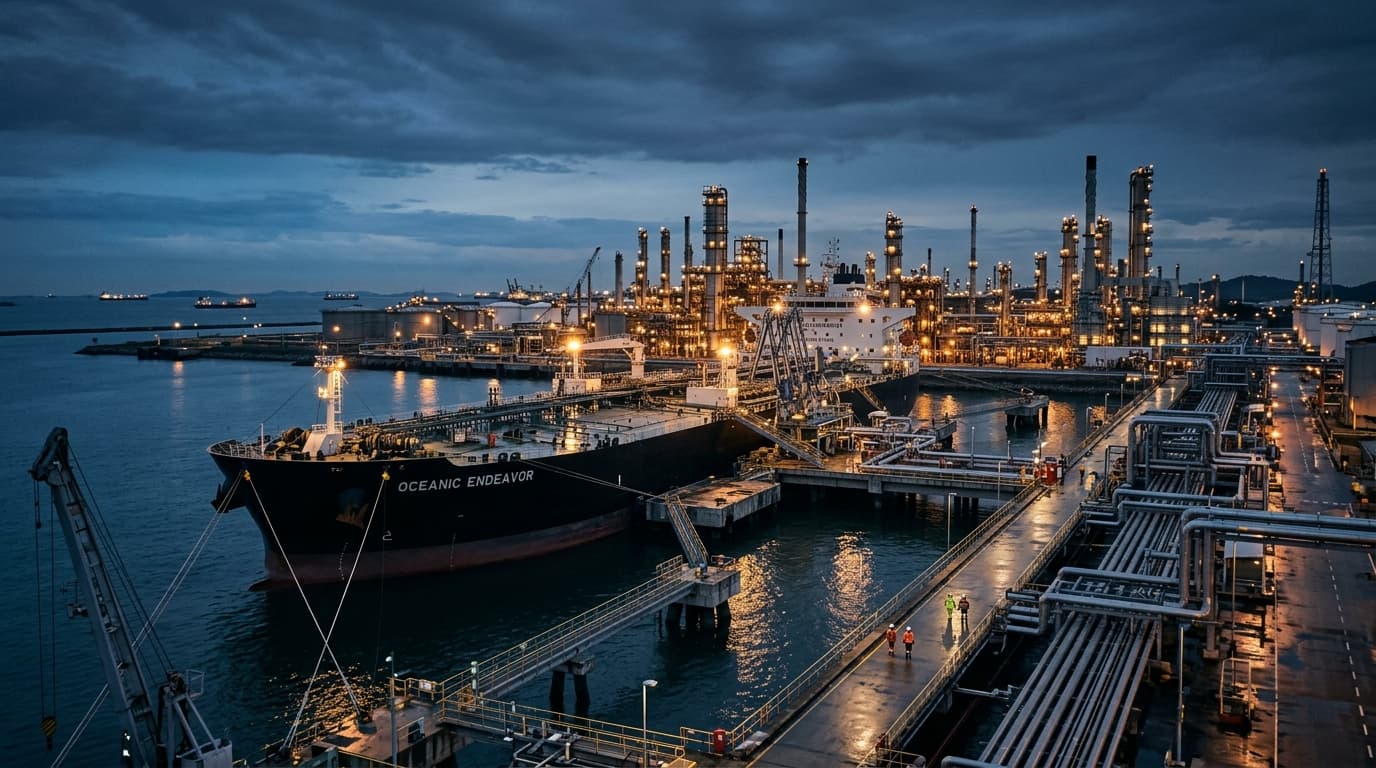
The global energy architecture has entered a consequential phase of realignment as Washington maneuvers to secure Russian ultra-low sulfur diesel (ULSD) volumes to arrest escalating domestic fuel benchmarks. The pivot is politically and economically striking: since February 2022, the United States, alongside the G7 coalition, instituted an aggressive web of economic containment, secondary sanctions, and price-cap mechanisms engineered specifically to depress the Kremlin's hydrocarbon revenues.
According to market disclosures on October 12, 2026, the executive administration framed an extraordinary bilateral conduit authorizing the offloading of over 300,000 metric tons of refined Russian middle distillates into the domestic market, with additional delivery tranches mapped through Q4 2026. While pitched as a surgical anti-inflationary dampener for domestic supply chains, the transaction exposes the structural limits of economic sanctions when confronted with acute domestic energy bottlenecks.
#Refining Economics and the Domestic Diesel Bottleneck
To evaluate why Washington would permit Russian diesel inflows, one must examine the mechanics of the diesel crack spread—the refining margin calculated between the cost of crude feedstock and the market price of finished distillates. Diesel is the operational bloodstream of modern industrial capitalism. Unlike finished motor gasoline, which largely serves personal mobility, middle distillates (specifically ULSD) power Class 8 heavy-duty freight trucks, freight rail, agricultural machinery, maritime barges, and domestic manufacturing hubs. When distillate inventories deplete, transport costs compound across every tier of wholesale and consumer commerce.
| Metric | Volume / Valuation | Operational Context |
|---|---|---|
| Initial Announced Volume | ~300,000 Metric Tons | ~2.23 Million Barrels ULSD |
| Estimated Cargo Valuation | ~$400 Million (Gross) | Subject to prevailing spot discounts |
| US Daily Diesel Consumption | ~3.9 – 4.1 Million bpd | Represents ~0.55 days of domestic transport use |
| Kremlin Direct Fiscal Take | ~30% – 40% of net margin | Constrained by transport surcharges & MET levies |
While 300,000 metric tons represents roughly 2.23 million barrels—just over half a day of aggregate domestic U.S. diesel consumption—its marginal utility is disproportionate. In tightly calibrated regional wholesale hubs such as New York Harbor (NYMEX ULSD delivery), physical prompt cargo injections can immediately suppress backwardation and reduce prompt delivery premiums.
#The Sanctions Dilemma: Economic Containment vs. Domestic Inflation
Since the passage of the 2022 executive orders and the G7 $60/barrel crude price cap (complemented by the $100/barrel premium product cap), the premise of Western energy statecraft was clear: decouple Western economies from Russian hydrocarbon reliance while maintaining physical volumes on world markets to avoid global price spikes.
#Russian Fiscal Realities and Logistical Constraints
From Moscow’s vantage point, the commercial arrangement delivers a high-profile diplomatic headline, but its underlying fiscal and structural benefits must be evaluated against ongoing domestic headwinds. While an initial shipment valuation of $400 million represents meaningful gross revenue, the net contribution to the Russian federal budget is constrained. Upstream mineral extraction taxes (MET), export customs levies, and state damping payments determine the sovereign capture rate, typically filtering between 30% and 40% of realized export prices into central coffers. Furthermore, repeated Ukrainian drone strikes against primary distillation units and hydrocrackers have temporarily constrained Russian domestic refining throughput by 8% to 12%, making sustained export flows dependent on constrained repair logistics and aging shadow tanker availability.
#Multi-Regional Repercussions: Europe and India
Across Brussels and Kyiv, the announcement generates profound disquiet. European member states endured severe macroeconomic shocks between 2022 and 2024 to systematically dismantle Russian pipeline gas and maritime crude imports, substituting them with high-cost alternatives. Witnessing Washington authorize Russian refined fuel imports risks fracturing trans-Atlantic diplomatic consensus. For New Delhi, this development carries profound macroeconomic significance. India has served as a critical balancer in global energy flows, importing Russian Urals crude at discounted rates, processing it within coastal super-refineries in Gujarat, and re-exporting compliant refined fuels westward. A direct U.S. procurement channel for Russian petroleum effectively neutralizes diplomatic criticisms previously directed at Indian refiners, while helping stabilize the global crude benchmark and softening India's current account deficit.
#Strategic Outlook
The decision to facilitate Russian diesel inflows into the American energy complex reflects an unyielding reality of macroeconomics: the politics of domestic inflation invariably dominate the geopolitics of foreign policy. While economic sanctions remain powerful instruments of asymmetric leverage, their efficacy is constrained by inelastic consumer demand for foundational commodities. For enterprise treasurers, institutional investors, and global logistics operators, the signal is unambiguous: global energy supply chains have decoupled from predictable multilateral doctrines, entering a volatile era where tactical bilateral expediency supersedes diplomatic orthodoxy.

Yash Jondhale is the founder, owner, and editor-in-chief of BlueCreast. He authors and directs all investigative reporting, empirical analysis, and editorial coverage across Technology, Financial Markets, Geopolitics, Health, and Modern Living.
BlueCreast enforces a moderated, high-signal comment policy. Share your perspective, constructive critique, or technical observations.
Related Analyses in Finance & Wealth

The Invisible War: How India’s Retail Traders Lost $33 Billion to Machines They Never Saw
An empirical investigation into how 8 million Indian retail traders lost over $33 billion in the options market to high-frequency trading algorithms, SEBI's probe into Jane Street, and the structural reality of modern market mechanics.

Smart Wealth Building in India: A Masterclass in Mutual Funds, SGBs, and Tax-Loss Harvesting
Demystifying modern personal finance for Indian salaried professionals and entrepreneurs. How to balance active equity, index SIPs, and sovereign gold while navigating revised capital gains rules.

RBI's Digital Rupee (e₹) Explained: How Retail CBDC and UPI Interoperability Transform Payments
Everything you need to know about the Reserve Bank of India's Central Bank Digital Currency. We demystify offline transactions, privacy guarantees, and how QR interoperability merges e₹ with UPI.
Sharp analysis delivered to your inbox every Sunday morning.
Join 25,000+ engineers, founders, and curious minds. Curated deep-dives across tech, financial independence, and high-performance living. Zero spam, unsubscribe anytime.
Double opt-in compliant. Protected by India DPDP Act and GDPR standards.